Chapter One
Savvis: Fixing the Road
Before Streaming Arrived
The early Internet was a network of networks.
That was its genius.
It was also its weakness.
A packet could leave a customer, enter a regional provider, cross a public exchange point, move onto a national backbone, transfer to another network, encounter congestion, change routes and finally reach the user.
Every participant could be operating its own network correctly.
The combined customer experience could still be terrible.
Savvis was built around a different idea:
Control more of the journey. Reduce avoidable handoffs. Connect more directly to the networks carrying the traffic. Measure what the user experiences. Engineer around congestion instead of merely selling a larger circuit.
Verified Public Record
Public SEC biographies identify me as a Savvis co-founder, place the company’s founding in 1995 and state that I left approximately two years later to begin Intira.

Meeting Andrew Gladney
Founder Recollection
While I was working at J&G Computer Solutions, I met Andrew Graves Gladney.
Andrew came from a prominent St. Louis family associated with the Seven-Up business. His mother had recently died, and my recollection is that he had formed an investment vehicle called Graves Capital.
“Andrew had access to capital. I had the architecture and operating vision. We believed we could build something neither of us could build alone.”
The company began as DiamondNet.
The immediate business could have remained a local Internet-access provider.
The ambition was much larger:
- A national backbone.
- Private and controlled network paths.
- Better performance visibility.
- Fewer avoidable bottlenecks.
- Support for media and serious enterprise applications.
- Accountability for the customer experience.
“DiamondNet sounded like a local Internet provider. We wanted to sell something more valuable: performance, visibility, accountability and trust.”
Andrew’s role as an essential early financial backer and co-founder belongs in the story. The exact Graves Capital structure, investment amount, capitalization percentages and founder agreements remain Founder Recollection until the original records are added to the archive.
The Bigger-Pipe Myth
The telecommunications industry often described performance through the size of the customer’s access circuit.
A larger connection could move more data.
But the access circuit was only one part of the route.
Once traffic left that circuit, it could encounter congestion, inefficient routing, overloaded exchange points, weak interconnections and unnecessary handoffs among providers that did not share responsibility for the final experience.
Contemporary Reporting
Contemporary reporting on Savvis described a private ATM network designed to avoid public network-access-point bottlenecks by connecting more deeply and directly into other networks. By late 1997, the company had around 60 employees, more than $10 million in venture funding and customers including PointCast and CDNow. (Forbes)
“The industry was selling customers faster driveways. I was focused on the traffic jam at the highway entrance. The speed of the driveway did not matter when every car reached the same blocked intersection.”
Audio and video exposed the problem immediately.
A webpage could arrive late and remain usable.
Continuous media had deadlines.
Packets arriving too late could be nearly as useless as packets that never arrived.
A network problem became silence. Stuttering. A frozen image. A broken experience.
“The application did not care how impressive the carrier’s network map looked. It cared whether the next packet arrived in time.”
Building the Network
The architecture required more than a good idea.
It needed circuits, routers, network access points, transit relationships, software, monitoring, operating procedures and engineers capable of making emerging technologies work under real customer traffic.
Founder Recollection
I recruited Gary Zimmerman from SBC to help turn the architecture into an operating network.
Contemporary Reporting
NANOG archive material from the period discusses Savvis’s use of early high-performance routing equipment and ATM, HSSI and FDDI technologies, along with the challenges of network quality of service, traffic engineering and transit capacity. (SecLists)
Savvis also operated a 24-hour network operations center with dedicated controllers monitoring the environment. (SecLists)
“The diagram was the easy part. We were ordering circuits, installing equipment, testing routes, debugging production behavior, negotiating with carriers and discovering how emerging hardware behaved under load. The network did not care what the presentation promised.”
The broader principle was simple:
- Keep traffic under managed control for more of its journey.
- Avoid unnecessary public bottlenecks where possible.
- Build stronger direct connections into the networks carrying the traffic.
- Monitor actual performance instead of relying only on theoretical capacity.
- Design the network around what the application and customer experienced.
The Digital Broadcasting Vision
Contemporary Reporting
A surviving February 1997 NANOG message identifies me as Savvis’s vice president of emerging technologies and research and development and references the Savvis Digital Broadcasting Network. (SecLists)
That title reflects what we were trying to solve.
The Internet had been built for data that could tolerate delay.
The next generation of applications would include audio, video and interactive services that exposed every weakness in the route.
“Streaming was not simply another application. It was a stress test for the architecture of the Internet.”
The Day the Company Almost Closed
Founder Recollection
At one point, according to my recollection, Andrew told me he was closing the business.
We had spent money.
We had an ambitious architecture.
We did not yet have the major customer that could prove a young St. Louis company belonged on a national stage.
“I did not accept that the story was over. I kept selling.”
Then came Apple.
Apple
Founder Recollection
My account is that a call involving Steve Jobs, then at NeXT, opened the first door.
That call did not magically produce a contract.
Enterprise selling is rarely that clean.
There were technical evaluations, requirements, internal advocates, negotiations and people inside Apple who had to decide whether a young company in St. Louis could be trusted.
People involved in the broader process included David Zimmerman, Marty Suzuki and my longtime friend Sam Wood.
The executed agreement is not yet in the public archive, so its exact term, value and scope remain founder recollection.
Contemporary Reporting
What is independently documented is that Apple became a Savvis customer. A January 1998 industry report listed Apple, CDNow, PointCast and Omron Electronics among companies receiving Savvis services and reported that the company had expanded to eight private network access points and points of presence in 11 cities. (Internet News)
“Apple did not merely provide revenue. Apple kept the company alive. Andrew had told me the business was closing. I closed Apple, and suddenly we had a customer whose name changed how investors, vendors, recruits and other customers viewed us. Before Apple, we had a theory. After Apple, we had proof.”
Apple also taught me something I had learned from my father:
Important people are still people. Make the call. Explain the idea. Accept that most doors may remain closed. You need only the right one to open.
My manuscripts consistently identify Apple as the defining early customer and describe David Zimmerman, Marty Suzuki and Sam Wood as participants in the broader relationship.
Omron and Enterprise Networking
Savvis was not only addressing public Internet performance.
Contemporary Reporting
A 1997 Omron announcement described a Savvis-built national corporate intranet initially connecting ten cities through ATM infrastructure using DS-3 and OC-3 capacity. (Lightwave Online)
This mattered because it demonstrated that the architecture could support serious enterprise communication, not only emerging media companies.
The same network principles applied:
- Control the path.
- Measure performance.
- Reduce unnecessary transitions.
- Accept responsibility for the complete experience.
My Father, Dick Ford and Gateway Venture Partners
Closing Apple solved one problem.
Scaling the company created ten more.
We needed working capital, equipment, financial controls, experienced leadership and investors capable of supporting a national buildout.
Founder Recollection
My father introduced me to Dick Ford at Gateway Venture Partners.
I arranged the meeting between Dick and Andrew.
“The architecture showed the opportunity. Apple showed that a major customer would buy it. Gateway brought the institutional capital and financial credibility required to build a real national company.”
My recollection places Gateway’s initial investment at approximately $2 million to $2.2 million. That precise amount remains a Founder Recollection until the term sheet, stock-purchase agreement or capitalization records are placed in the archive.
The underlying lesson is larger than the number:
My father’s relationship created the introduction.
Apple created the credibility.
The network architecture created the opportunity.
All three were necessary.
Bob Murphy Builds the Financial Engine
After Gateway became involved, Bob Murphy joined the company as chief financial officer.
“Gateway did not only write a check. It helped professionalize the business. Bob built a financial organization capable of supporting a company growing beyond its original founders. In my recollection, he helped raise roughly another $30 million and brought financial discipline to an aggressive technical vision.”
The exact total and financing sequence remain founder recollection pending the original documents.
But the larger point is important:
A network architecture cannot become a national business without a financial architecture capable of supporting it.
The routers required capital. The circuits required contracts. The employees required payroll. The customers required confidence that the company would still exist tomorrow.
4.905 Seconds
The Number That Made People Pay Attention
Contemporary Reporting
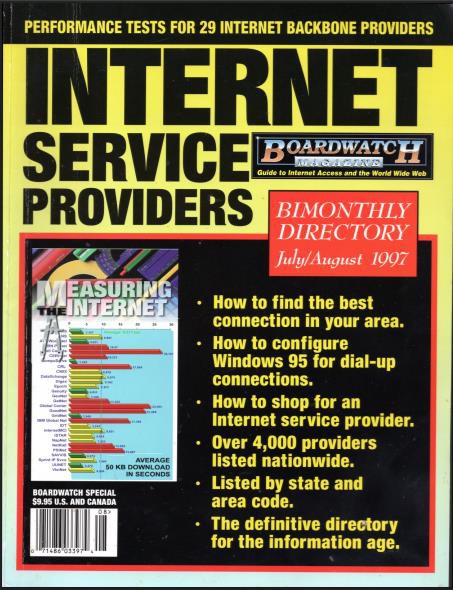
In November 1997, a Keynote Systems and Boardwatch study measured page-download performance across 34 Internet backbone providers.
Savvis ranked first with a reported average download time of:
4.905 SECONDS
The result gave a young St. Louis company a measurable performance story against much larger telecommunications providers. Contemporary Forbes reporting highlighted Savvis’s speed advantage and attributed it to the company’s private network and deeper direct connections. (Forbes)
“Before the measurement, we told people the architecture should perform better. After the measurement, the sales team had a number. Engineers could debate the methodology. Customers could test the network. Investors could see that a small company had designed something capable of competing with much larger names.”
The methodology was debated within the networking community, including questions about testing endpoints and server configuration. That debate belongs in the story.
A credible history does not hide the argument.
It explains why the result mattered while acknowledging that real-world performance testing is complicated.
Success Did Not Repair the Partnership
As Savvis gained customers, investors, employees and value, the relationship between Andrew and me deteriorated.
“Andrew and I began fighting over ownership, control and who would benefit financially from what we had created. I believed Andrew was trying to squeeze me out for his personal financial gain. What began as a partnership became litigation. The matter ultimately settled, and I left the company I had helped create. I did not leave because I stopped believing in the network. I left because I no longer believed the founder relationship could be repaired.”
Verified Public Record
Public biographies confirm that I left Savvis approximately two years after co-founding it to begin Intira. They do not independently establish the details or causes of the ownership dispute.
Permanent Right-of-Response Notice
This is Timothy Roberts’s firsthand account of a founder and ownership dispute. Andrew Gladney or his representatives may hold a different account. Built Before Cloud welcomes relevant records, corrections and a response from Andrew or his representatives, which will be reviewed and published alongside this chapter. Contact options are available on the Corrections page.
Bridge Information Systems
Savvis continued growing after my departure.
Contemporary Reporting
Bridge Information Systems acquired Savvis in April 1999 and combined Savvis’s 18-city network with Bridge’s broader global infrastructure, creating an 87-city IP and ATM network. (Channel Dive)
The company that followed was much larger than the original founding partnership.
Bridge brought capital, customers, global reach and enormous concentration risk.
It also created the path toward the public market.
The Savvis IPO
Verified Public Record
On February 15, 2000, Savvis sold 17 million shares at $24 per share.
The offering raised approximately $408 million and produced a reported market value of approximately $2.2 billion. Bridge owned roughly 69% before the offering and was expected to provide more than 80% of Savvis’s first-year revenue.
$408 MILLION RAISED
APPROXIMATELY $2.2 BILLION IN REPORTED MARKET VALUE
ONE ENORMOUS CUSTOMER-CONCENTRATION RISK
“The IPO was validating and strange. The company Andrew and I started had become worth billions. Neither of us controlled it. That is one of the hardest truths about venture-backed companies: creating the original value does not guarantee that you will own or control the final outcome.”
Savvis Becomes Managed Infrastructure
Verified Public Record
Savvis survived the collapse of Bridge and continued evolving.
The company expanded beyond Internet access into managed hosting, colocation, network services and cloud infrastructure.
In 2004, it acquired Cable & Wireless America assets that included a Tier 1 network, 15 enterprise hosting centers and more than 5,000 customers.
By 2005, the company described itself as serving more than 5,000 enterprise customers across 47 countries through 24 data centers.
CenturyLink completed its acquisition of Savvis in July 2011. The announced transaction valued Savvis at approximately $2.5 billion plus around $700 million of net debt, while final accounting recorded aggregate consideration of approximately $2.38 billion.
“The company CenturyLink acquired was built by thousands of people over many years. My chapter was the beginning. I am proud of the foundation without claiming ownership of everything that followed.”
Naming Rights, Headquarters and St. Louis Legacy
Corroborated Recollection
Beyond the backbone and the IPO, Savvis left a physical imprint on St. Louis: arena naming rights, a corporate campus, a street named for the company, and a headquarters story that ran through Brooks Fiber, WorldCom and a Broadband Investment Group lease.
Savvis began with a network-performance thesis.
It ultimately became valuable for the managed infrastructure, hosting, colocation and cloud capabilities built on top of that network.
The company had followed the same direction I was already pursuing elsewhere.
Savvis Worked on the Road.
Intira Would Operate Everything Beneath the Application.
The cloud was not invented in a moment. It was built layer by layer.
Platformz brings those layers together.